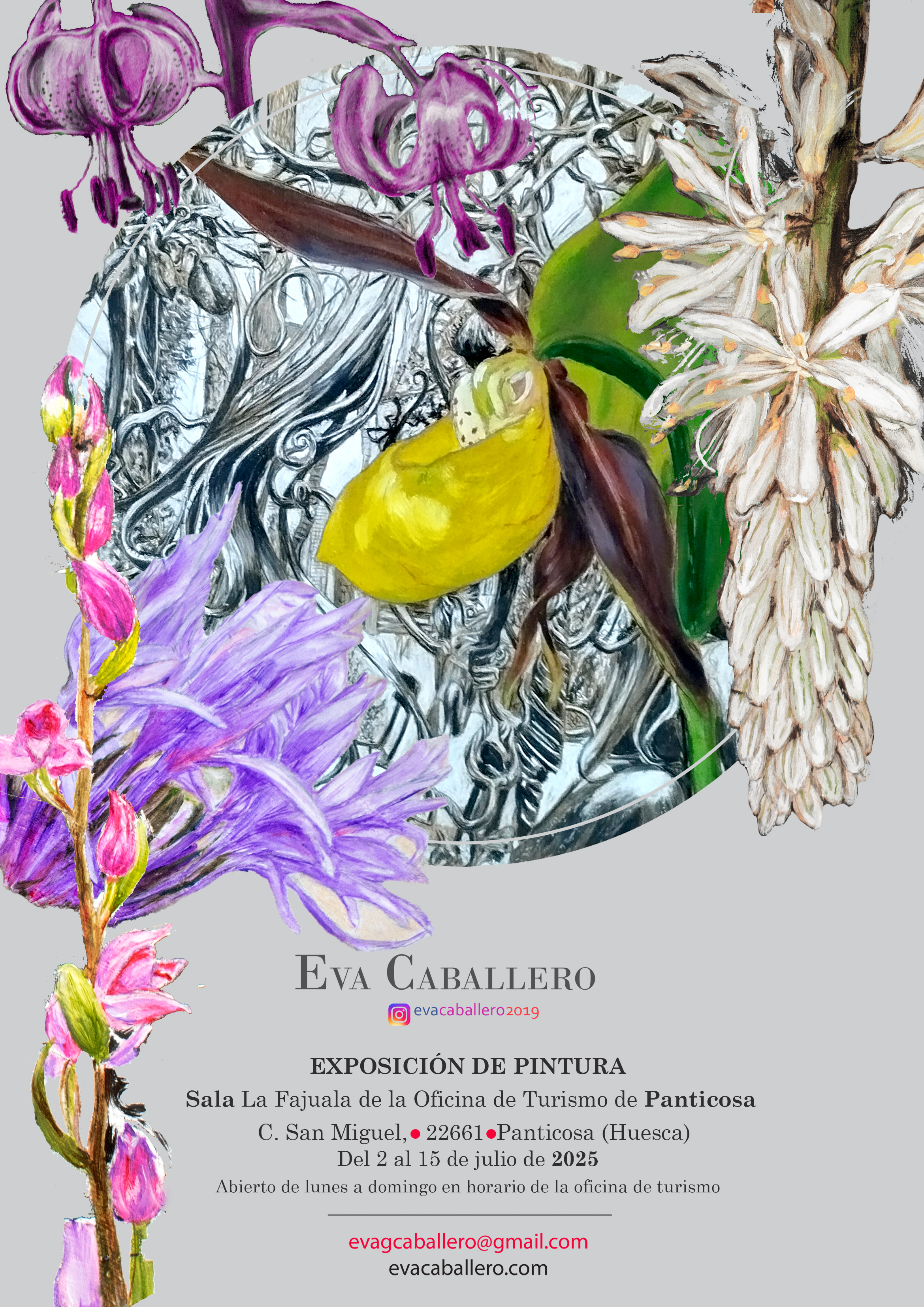
Esta primera quincena de julio tengo exposición de Pintura en Panticosa (Alto Aragón, Valle del Tena). Allí, además de impartir talleres vuelvo a mostrar los Outsiders realizados con óleo sobre madera. Hay algunos nuevos, y otros que ya no están, han volado a otros lares. Para todos los que os animéis a visitarla, la tendré hasta el 15 de julio. /
This first half of July, I have a painting exhibition in Panticosa (Pyrenees). There, in addition to teaching workshops, I’m once again showing the Outsiders, painted in oil on wood. There are some new ones, and others that are no longer here, having flown to other places. For all of you who are interested in visiting, I’ll have it on display until July 15th.
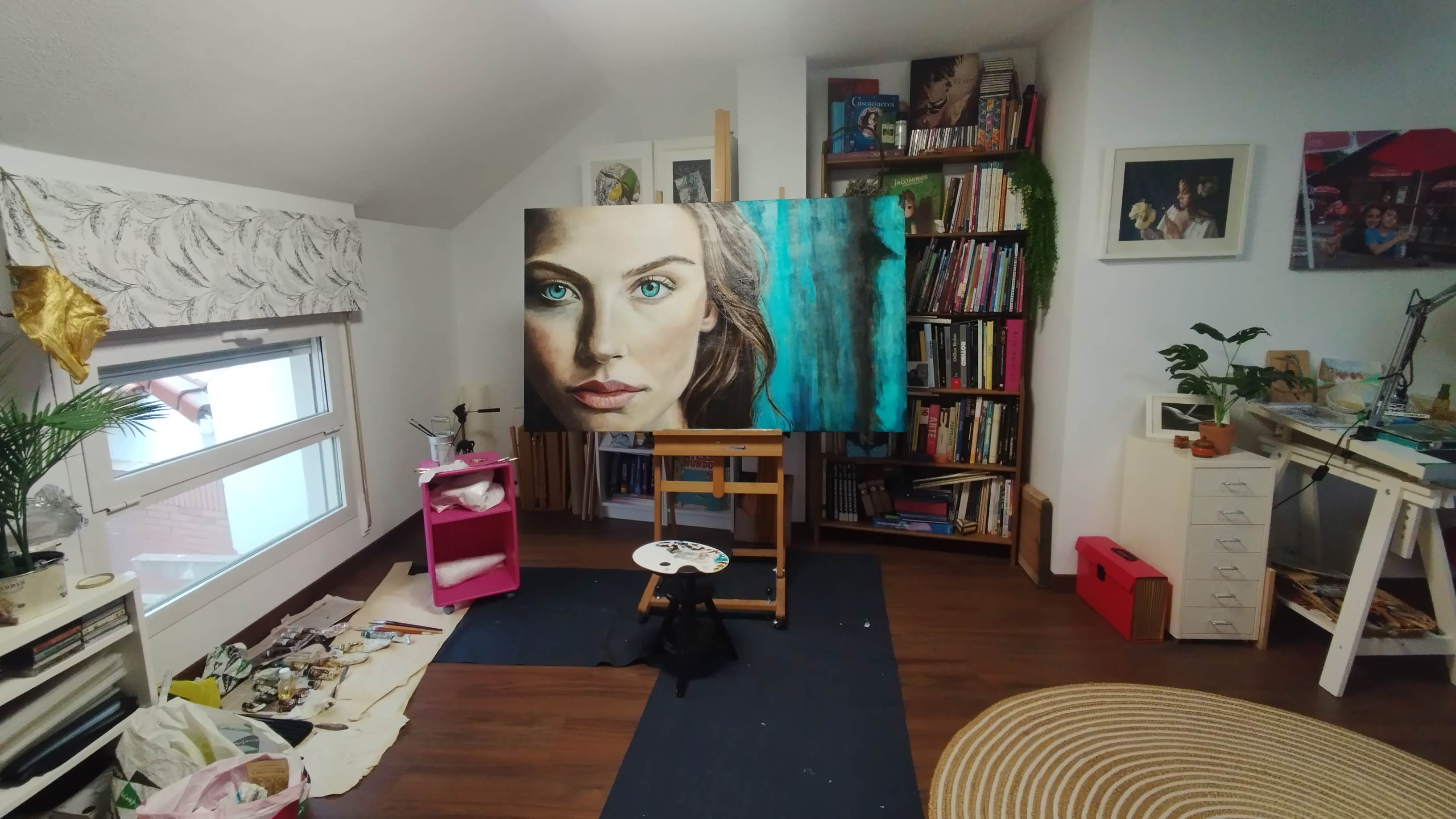
Terminado el último cuadro que me han encargado, este retrato al óleo sobre lienzo de 1 m 60 cm × 1 m. A punto de irse para su nueva casa en Holanda./ I’ve finished this last order. Oil on Canvas. His new home waiting for her in Netherlans.
Me acaban de pedir un dibujo para la portada de la revista digital de Puceliner, y esta es la ilustración que he realizado, a tinta, acuarela líquida y acrílico blanco. Aquí el texto he escrito para acompañarla:
“Naturaleza invadiendo el museo de escultura” Esta es una de las imágenes que guardo en la retina de Valladolid: el impresionante claustro del Museo de Escultura. Entre sus columnas, capiteles y filigranas, en mi mente cobra vida esa preciosa ornamentación vegetal, invadiendo el claustro y dotándole de, si aún fuese posible, más alma de la que ya tiene./
I have just been asked to draw for the cover of Puceliner’s digital magazine, and this is the illustration I have done, in ink, liquid watercolour and white acrylic. Here is the text I have written to accompany it:
“Nature invading the sculpture museum” This is one of the images I keep in my retina of Valladolid: the impressive cloister of the Sculpture Museum. Between its columns, capitals and filigree, that beautiful plant ornamentation comes to life in my mind, invading the cloister and giving it, if it were still possible, more soul than it already has.
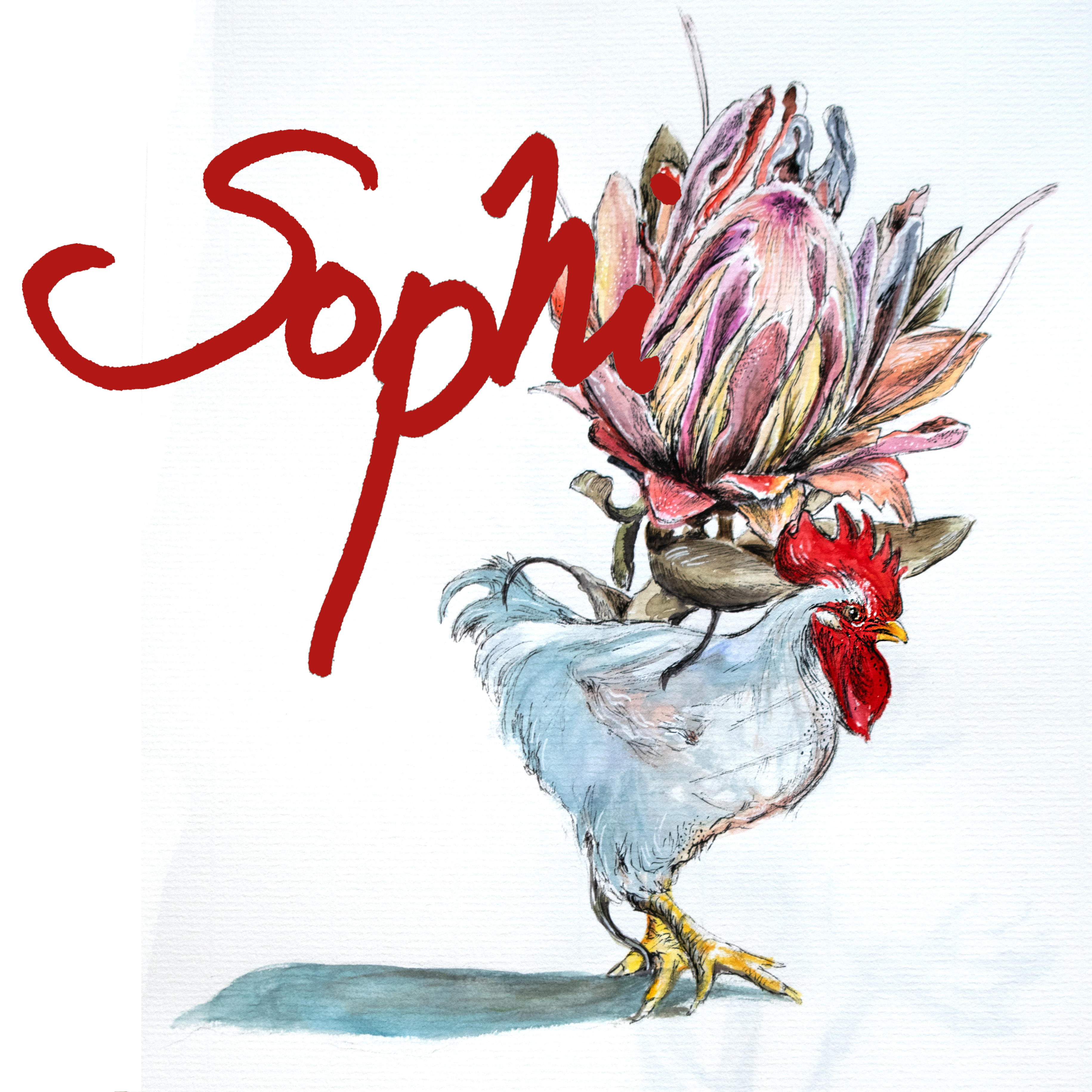
Encantada de haber terminado este encargo para Sophi, una cantautora con una voz alucinante y unas letras que hablan de cosas que no son «ir a comprarme un maquillaje Coco Chanel». Este 1 de noviembre estará cantando en el emblemático Café Libertad 8 en Madrid. Yeah!
Ilustración realizada a tinta y acuarela líquida para la portada de uno de sus discos./
Delighted to have finished this assignment for Sophi, a singer-songwriter with an amazing voice and lyrics that talk about things that aren’t «going to buy myself some Coco Chanel makeup.» This November 1st she will be singing at the iconic Café Libertad 8 in Madrid. Yeah!
Illustration made with ink and liquid watercolor for the cover of one of his albums.
Estos son los últimos tres encargos que he terminado este verano. Los retratos de estas preciosidades a óleo sobre madera en formato circular de 30 cm de diámetro./ These are the last three commissions I have finished this summer. The portraits of these beauties in oil on wood in a circular format of 30 cm in diameter.
Ayer por la mañana no sé quién se lo pasó mejor, si los peques de la escuela de verano de Broto con este taller o yo 😃 . Preciosas les quedaron las flores del Pirineo/ Yesterday morning I don’t know who had a better time, the kids from the Broto summer school with this workshop or me 😃. The flowers of the Pyrenees were beautiful.
From August 3 to 12 you can see the Outsiders in the beautiful town of Broto, adjoining the Ordesa y Monte Perdido National Park
Carlina Acaulis/ Carlina
Bien podría llamarse “bruja” a aquella mujer que decapitase a un hombre, y más ella sola con una espada. Bien podríamos decir que la “carlina” en este caso no la ha espantado de cometer tan atroz disparate, o bien podríamos presentar a esa mujer no como una “bruja”, en el sentido peyorativo de la palabra, sino como una “bruja” en el sentido de una mujer fuerte y con valentía, que lucha por aquello que quiere sin importar las consecuencias. Tal y como Artemisia nos presentó a su Judith.
Homenaje a Artemisia Genteleschi.
Carlina Acaulis. Cuenta la leyenda, que las brujas durante la noche, llegaban a las casas, y en aquellas en las que colgaba una carlina de su puerta, se paraban a contar los «pelitos» que estas tenían, tantos eran, que la luz del amanecer comenzaba cuando aún no llevaban contados ni la mitad, con lo cual, terminaban por irse sin entrar. Es por ello por lo que aún podéis ver estas Carlinas protectoras en las puertas de las casas del Alto aragón./
A woman who decapitates a man could well be called a “witch,” especially by herself with a sword. We could well say that the “carlina” in this case has not scared her away from committing such atrocious nonsense, or we could present that woman not as a “witch”, in the pejorative sense of the word, but as a “witch” in the sense of a strong and courageous woman, who fights for what she wants regardless of the consequences. Just as Artemisia introduced us to her Judith.

Tribute to Artemisia Genteleschi.

Carlina Acaulis. Legend has it that witches came to houses at night, and in those where a carlina hung from the door, they stopped to count the "little hairs" they had, so many that the light of dawn began to appear. when they had not even counted half of it, so they ended up leaving without entering. This is why you can still see these protective Carlines on the doors of the houses in Alto Aragón.
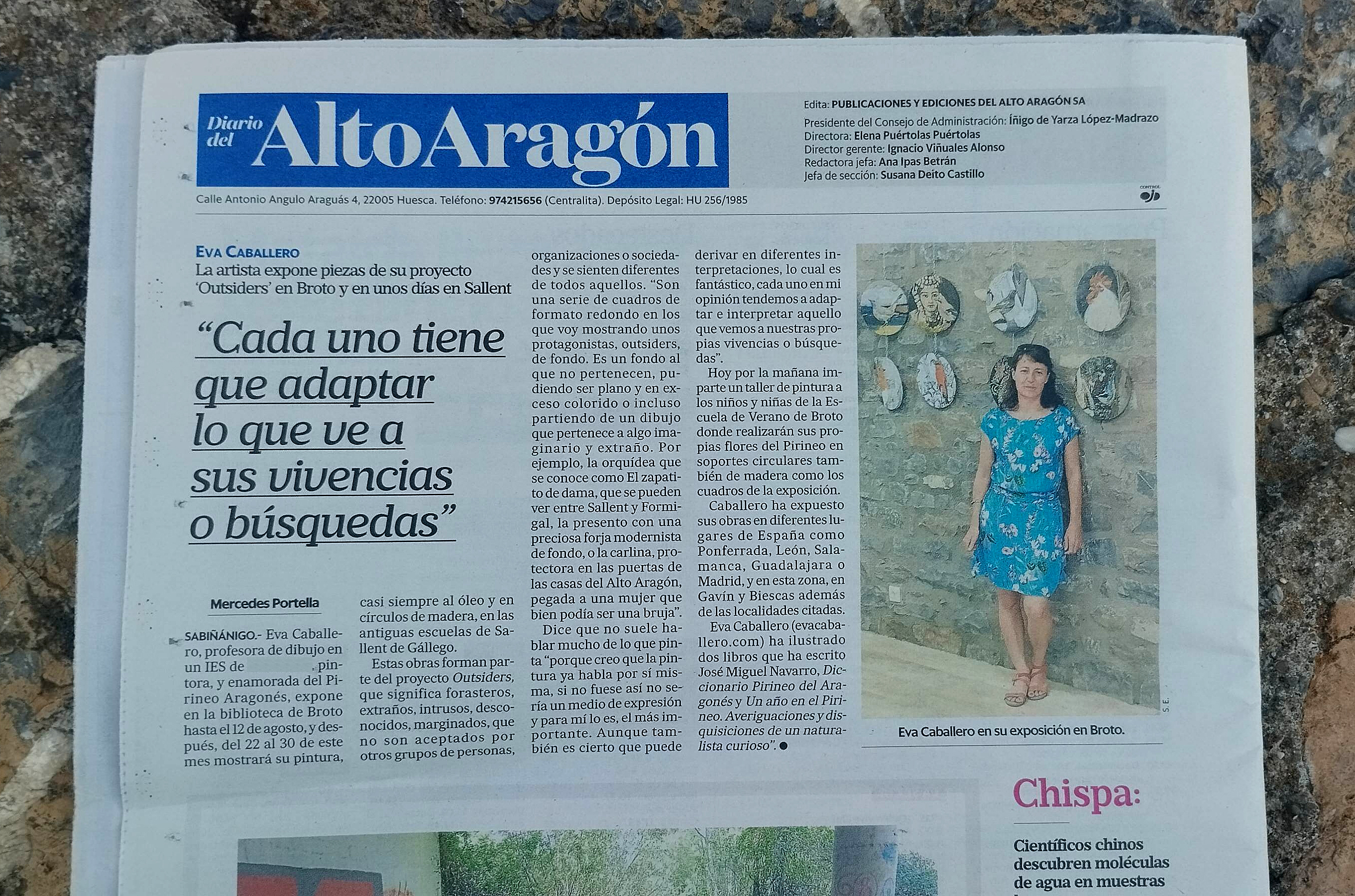
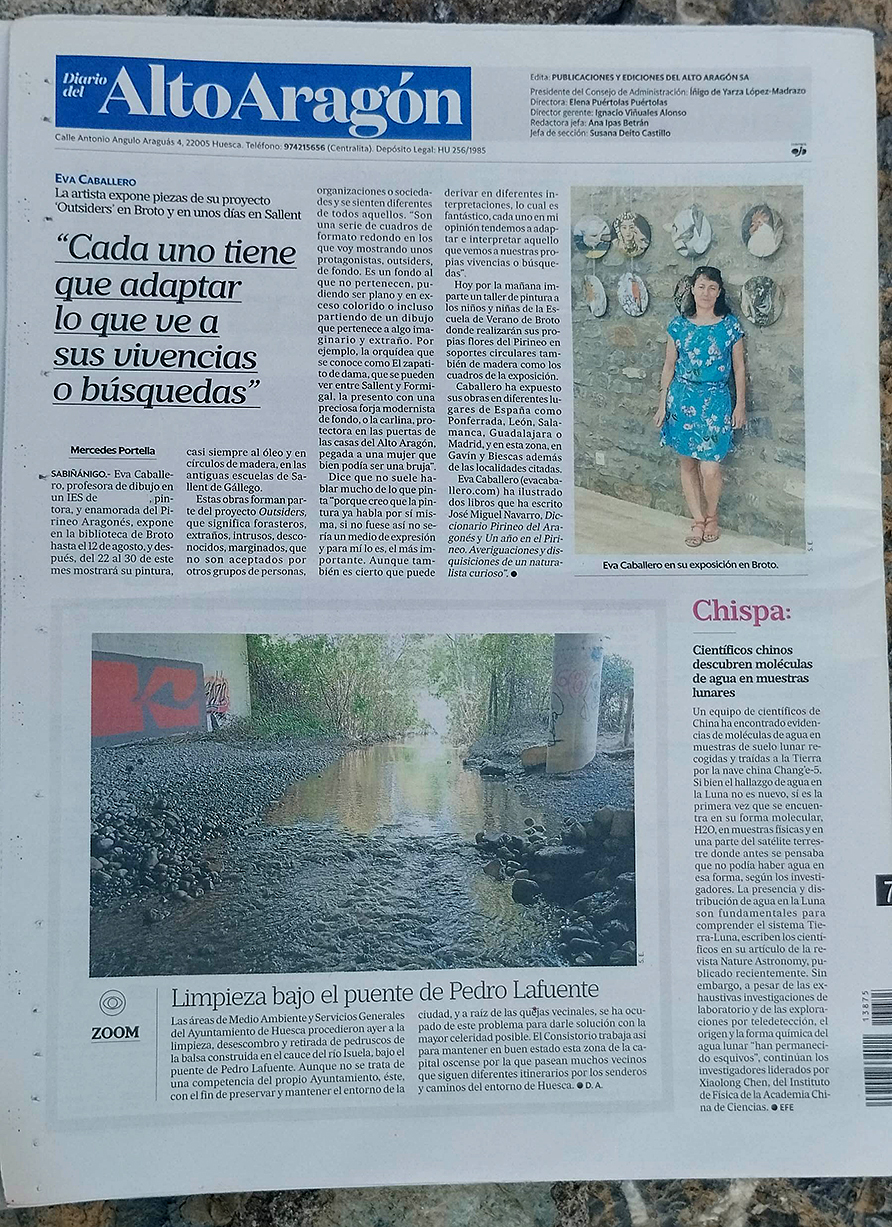
Y esta es la Expo que estreno este verano en Pirineos. La primera será en Broto (aladito de Ordesa), y la segunda en Sallent de Gállego (Valle del Tena). Ambas en agosto, y ambas son una continuación de la serie Outsiders, solo que esta vez, los protagonistas, además de pájaros serán flores y plantas del Pirineo. «Outsiders»: Forasteros, extraños, intrusos, desconocidos, marginados, que no son aceptados por otros grupos de personas y se sienten diferentes de todos aquellos. Desde quien llega a un país que no es el suyo, a quien no encuentra su sitio, o simplemente se siente fuera de lugar en momentos específicos de su vida, aquello que te hace moverte, buscar el sitio al que perteneces, o despegarte de aquel que no es el tuyo. Esta ha sido la premisa de la que he partido en el comienzo de esta serie de cuadros, en la que figura y fondo no tienen nada que ver. /
And this is the Expo that premiered this summer in the Pyrenees. The first will be in Broto (aladito de Ordesa), and the second in Sallent de Gállego (Valle del Tena). Both in August, and both are a continuation of the Outsiders series, only this time, the protagonists, in addition to birds, will be flowers and plants from the Pyrenees. «Outsiders»: Outsiders, strangers, intruders, unknown, marginalized, who are not accepted by other groups of people and feel different from all those. From those who arrive in a country that is not theirs, to those who cannot find their place, or simply feel out of place at specific moments in their life, what makes you move, look for the place where you belong, or detach yourself from that one. which is not yours. This has been the premise from which I started at the beginning of this series of paintings, in which figure and background have nothing to do with each other.
Cypripedium Calceolus/ Zapatito de dama
Cuentan que fue un botánico francés que volvía a su país quien las divisó desde la ventanilla del autobús en el que viajaba y avisó a los técnicos del Instituto Pirenaico de Ecología. Era finales de los años setenta y hasta entonces apenas se tenían localizaciones en el Pirineo, debido a la recolección de la planta para los herbarios. Estamos hablando del Zapatito de Dama (Cypripedium calceolus), una rara orquídea que está incluida en el Catálogo de Especies Amenazadas en Aragón.
Dicen los expertos que hay 11 poblaciones en España. Seis de estas poblaciones de Zapatito de Dama están en la provincia de Huesca. Muy cerca de Formigal es donde se encuentra la más grande e importante que se conoce en España, en las faldas del monte Pacino de Sallent de Gállego. Desde el año 2000, el Gobierno de Aragón vigila esta zona para evitar el pisoteo y concienciar a los visitantes de la importancia que tiene la salvaguarda de la biodiversidad. Es el personal del colectivo Foratata quien está allí desde que amanece hasta última hora de la tarde para realizar esta labor. El primer año, fueron poco más de un centenar los visitantes. Ahora rondan los 1.500 / 2.000 por temporada. Cinta de balizamiento es lo que usan para que estas visitas no pisen donde no deben, así quedan encerradas las cyprepedium. No es el caso de la que se presenta en este cuadro, donde ella ha escapado a ese entorno vallado. Con una preciosa forja modernista, eso sí, pero vallado al fin y al cabo. /
They say that it was a French botanist returning to his country who saw them from the window of the bus in which he was traveling and notified the technicians of the Pyrenean Institute of Ecology. It was the end of the seventies and until then there were hardly any locations in the Pyrenees, due to the collection of the plant for herbaria. We are talking about the Lady’s Slipper (Cypripedium calceolus), a rare orchid that is included in the Catalog of Endangered Species in Aragon. Experts say that there are 11 towns in Spain. Six of these Zapatito de Dama populations are in the province of Huesca. Very close to Formigal is where the largest and most important one known in Spain is located, on the slopes of Mount Pacino de Sallent de Gállego. Since 2000, the Government of Aragon has monitored this area to prevent trampling and raise awareness among visitors of the importance of safeguarding biodiversity. It is the staff of the Foratata collective who is there from dawn until late afternoon to carry out this work. The first year, there were just over a hundred visitors. Now they are around 1,500 / 2,000 per season. Marking tape is what they use so that these visitors do not step where they should not, so the cyprepediums remain enclosed. This is not the case of the one presented in this painting, where she has escaped to that fenced environment. With a beautiful modernist forge, yes, but fenced after all.







 evacaballero